

When Will Ramadan 2026 Start and End Worldwide?
Dates, Fasting Rules & Complete Guide
“When is Ramadan 2026?” is a question that remains on the lips of every Muslim throughout the year. Muslims ask this so they can prepare in advance for the arrival of this blessed month. This preparation helps them benefit fully from the blessings, virtues, and rewards of Ramadan. So that when Ramadan arrives, they may seek the pleasure of Allah Almighty and forgiveness for their sins.
Ramadan is one of the most anticipated months in the Islamic year, a time of reflection, fasting, worship, and connection with the community. Every year, Muslims around the world ask the same important question: When will Ramadan begin and end? The answer is not always identical across countries, as Ramadan follows the lunar calendar and depends on moon sighting.
In this comprehensive guide, we’ll explain the Ramadan 2026 start and end dates worldwide, why dates vary by region, and what Muslims should know about Ramadan fasting rules, daily timings, and key religious moments during the month. Furthermore, for complete Sehri and Iftar times, you can view the Ramadan Calendar 2026 for Lahore, Pakistan.
When is Ramadan this year?
Ramadan 2026 Expected Dates (Worldwide) based on astronomical calculations and typical moon sighting patterns:
Expected start of Ramadan 2026: around 17-18 February 2026
Expected start of Ramadan 2026: around 17-18 February 2026
Expected Eid al-Fitr 2026: around Friday, 20-21 March 2026
Important: These dates are estimates, not final. The confirmed start and end depend on official moon sighting announcements in each country
Why Ramadan Dates Change Every Year?
Ramadan is based on the Hijri (Islamic lunar) calendar, which follows the moon rather than the sun. Since the lunar year is shorter than the Gregorian year by around 10–11 days, Ramadan shifts earlier each year and moves through different seasons over time.
This is why some years Ramadan falls in winter, with shorter fasting hours, while in other years it occurs in summer, when days are much longer.
The Prophet Muhammad (PBUH) clearly explained how Ramadan is determined through moon sighting:
“Fast when you see it (the new moon), and break your fast when you see it. If it is cloudy, then complete the number (of days) as thirty.”
(Sahih Muslim 1080b)
Ramadan ends at sunset on the last day of fasting, and Eid al-Fitr begins the next day. Because Ramadan is based on moon sightings, the exact end date can vary from country to country. In some places, Ramadan may end a day earlier or later, depending on when the new moon is seen.
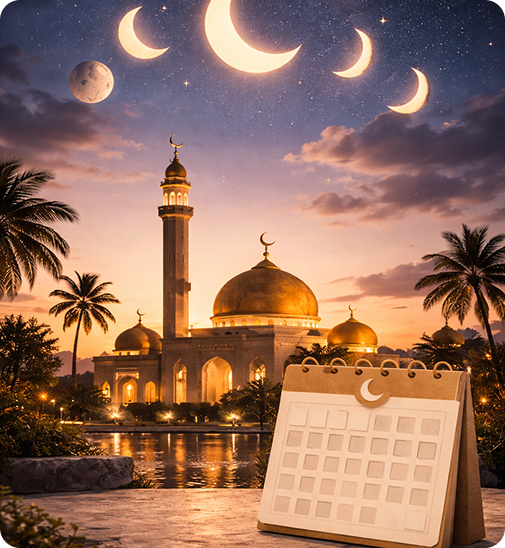
After How Many Years Do Ramadan Dates Repeat?
Since Ramadan shifts by about 10–11 days every year, it takes roughly 33 years for Ramadan to return to approximately the same time of year and similar Gregorian dates again. In simple terms, Ramadan completes a full seasonal cycle about once every three decades.
How is Ramadan Officially Confirmed Each Year?
Ramadan is officially confirmed through moon sighting (Hilal observation), which usually takes place on the 29th night of Shaban (the 8th month of the Hijri calendar). This is the key night when Muslims around the world wait for the announcement of whether Ramadan will begin the next day, and to wish each other Ramadan Greetings.
What Happens On The 29th Night of Shaban?
On this evening:
How is the Official Announcement Made
Once the moon sighting reports are verified:
The Same Method is Used For Eid al-Fitr
This exact process is repeated at the end of Ramadan on the 29th night of Ramadan, when authorities look for the crescent moon of Shawwal. If the moon is sighted, Ramadan ends, and Eid al-Fitr is celebrated the next day. If not, Ramadan completes 30 days, and Eid is one day later.

Fasting Rules of Ramadan (2026 Guide)
Fasting in Ramadan is not simply avoiding food; it is a complete act of worship that trains a Muslim in discipline, patience, and sincerity. This month, Muslims fast from dawn until sunset to obey Allah and purify their actions and character.
The Prophet Muhammad (PBUH) highlighted the spiritual purpose of fasting, not just the physical hardship:
“Whoever does not give up false speech and acting upon it, Allah has no need of him leaving his food and drink.”
(Sahih al-Bukhari 1903)
This Hadith shows that fasting is not only about hunger, but it is also about self-control and moral behaviour.
What to Avoid During Fasting
A fasting person must refrain from anything that contradicts the fast during daylight hours, including:
In short, Ramadan fasting is a daily commitment to protect:
What if Someone Eats or Drinks By Mistake?
If a person forgets they are fasting and eats or drinks unintentionally, their fast is still valid.
The Prophet Muhammad (PBUH) said:
“If someone forgets while fasting and eats or drinks, then let him complete his fast, for it was Allah who fed him and gave him drink.”
(Riyad as-Salihin 1242)
In this case, the person should stop immediately upon remembering and continue fasting as usual.
Can you have sex during Ramadan?
According to islam during the daytime hours of Ramadan (from Fajr to Maghrib), all adult Muslims are forbidden to have sexual intercourse, as this would invalidate the fast. This is based on the Qur’an and Hadith.
Allah says:
“And do not approach them while you are in retreat in the mosques, but eat and drink until the white thread of dawn becomes distinct to you from the black thread [of night]. Then complete the fast until sunset”
(Surah Al-Baqarah 2:187 — part of the verse explains permissible times and restrictions, including sexual activity)
The Prophet Muhammad ﷺ said:
“When one of you is fasting, he should abstain from sexual relations and from quarrelling. If someone fights or behaves obscenely with his spouse, let him not indulge in such acts during the day.”
(Surah Al-Baqarah 2:187 — part of the verse explains permissible times and restrictions, including sexual activity)
What Breaks the Fast?
Many people know that food and drink break the fast, but Ramadan also has other rulings that Muslims should understand clearly. In general, a fast is broken when something is intentionally done that goes against the conditions of fasting. A fast is invalidated if a person intentionally:
This includes:
- Meals, snacks, sweets
- Water or any beverages
- Swallowing something on purpose (even small amounts)
This includes:
- Cigarettes, shisha, cigars
- Vape pens/e-cigarettes
- Any inhaled substance taken deliberately
This is one of the most serious invalidators of the fast. It not only breaks the fast but may require major compensation (kaffarah) depending on the ruling followed.
If someone makes themselves vomit on purpose, the fast breaks. However, if vomiting happens naturally without control, the fast remains valid.
If a person takes:
- IV drips
- Nutritional injections meant to replace food/water
Then the fast is generally considered broken by many scholars because it replaces nourishment. Note: Non-nutritional injections (like certain medicines) may have different rulings depending on the type and scholarly opinion.
Who Does Not Have to Fast?
Islam is a religion of balance and mercy; fasting is not meant to cause harm or unbearable hardship. That is why certain people are excused from fasting, either temporarily or permanently, depending on their situation. Some People commonly exempt from fasting include:
- People with severe illness
- Those whose recovery may be delayed by fasting
- Those who need regular medication/food intake
If fasting causes serious harm every year, the person is exempt and may be required to give charity (fidya) instead.
They may delay fasting and make up later, depending on health and ability.
A traveller may postpone fasting if travel causes hardship or difficulty. This is a mercy given by Allah for ease.
Women in this state do not fast, and they make upfor missed days later.
The Prophet (PBUH) said regarding menstruation:
“Is it not the case that when she menstruates, she does not pray and she does not fast?”
(Sahih al-Bukhari 304)
If fasting is extremely difficult or harmful due to old age, they are exempt.
Children are not obligated to fast until they reach adulthood, though many families gradually encourage the practice.
Ramadan 2026 Fasting Times: How Long Will You Fast?
Ramadan 2026 is expected to fall in late winter to early spring, which means fasting hours in many countries will be moderate compared to summer Ramadans. However, the total fasting duration still depends on your location, latitude, and local sunrise/sunset times.
Approximate fasting durations (Ramadan 2026)
- UK: ~11–13 hours
- USA & Canada (varies by region/state): ~11–14 hours
- Middle East (Saudi Arabia, UAE, Qatar, Oman, etc.): ~12–14 hours
- Pakistan: ~12–13.5 hours
- India & Bangladesh: ~12–13.5 hours
- Indonesia & Malaysia: ~12–13 hours
- Scandinavia / Northern Europe: may be 14+ hours, depending on latitude
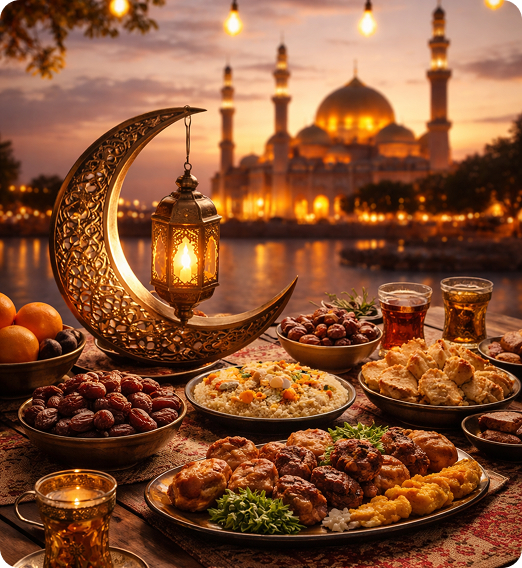
How to Prepare for Ramadan 2026?
Ramadan is not only about the first day, but it’s also about preparation and consistency. Here are useful steps to prepare:

How to Prepare for Ramadan 2026?
Ramadan is not only about the first day, but it’s also about preparation and consistency. Here are useful steps to prepare:

The Last 10 Nights of Ramadan
The final ten nights are the most spiritually significant part of Ramadan. The Prophet Muhammad (PBUH) used to increase worship during these nights more than at any other time.
Aisha (RA) reported:
“When the last ten nights of Ramadan came, the Prophet ﷺ would stay up at night, wake his family, strive hard in worship, and tighten his waist-wrapper.”
(Sahih al-Bukhari, 2024)
Laylat al-Qadr (Night of Power)
Laylat al-Qadr is one of the greatest nights in Islam, and it occurs during the last ten nights of Ramadan.
The Prophet (PBUH) said:
“Seek Laylat al-Qadr in the last ten nights of Ramadan.”
(Sahih al-Bukhari 2020)
And he also specified the odd nights:
“Seek it in the odd nights of the last ten nights of Ramadan.”
(Sahih al-Bukhari 2017)
That is why Muslims focus especially on the:
- 21st night
- 23rd night
- 25th night
- 27th night
- 29th night
Reward of Worship on Laylat al-Qadr
As for the reward of worshipping on Laylat al-Qadr, the Prophet (PBUH) said:
“Whoever stands (in prayer) on Laylat al-Qadr out of faith and hoping for reward, his previous sins will be forgiven.”
(Sahih al-Bukhari 1901)
Conclusion
Ramadan 2026 is expected to begin around 17-18 February 2026 and end around 19-20 March 2026, but the final dates depend on moon sighting announcements in each country. Whether you’re fasting in the Middle East, Europe, Asia, or North America, Ramadan remains a global month of devotion, reflection, and community.
With the right preparation, knowledge of Ramadan rules, and understanding of how dates are confirmed worldwide, you can enter Ramadan 2026 with confidence and purpose. Along with fasting, Muslims strengthen their connection with Allah through daily Namaz. They also focus on the recitation of the Holy Qur’an throughout this blessed month. Reflecting on powerful chapters like Surah Yaseen reminds believers of faith, guidance, and the reality of the Hereafter.